
About the UK Community of Practice Knowledge Production Series
This essay is part of the Liberatory Archives and Memory (LAMy) UK Community of Practice knowledge production series. Together, memory workers, artists, and archivists share reflections, research, and creative practices that reimagine archives as
living, collective spaces of resistance, healing, and liberation.
By Paula Ogun Hector
Background
Tapestry of Black Britons is an act of cultural remembering – an unpicking of empire’s seams and a re-threading of the stories that have always been here.
This evolving artwork stands as a testament to the interconnectedness of human experiences, emphasising that the richness of British history is incomplete without acknowledging and paying tribute to the profound contributions of people of African descent.
Growing over time, this diasporic multi-participant project currently includes two woven tapestries: a Yoruba creation story; and a tribute to the overlooked role of Black servicemen and servicewomen in World War II. Myth and memory are not opposed – they are threads of the same cloth, celebrating ancestral knowledge, storytelling and resilience.
Tapestry, an ancient art form spanning cultures and centuries, has evolved into a dynamic medium that bridges tradition and innovation. Today, the integration of digital technology invites diverse perspectives and skills into the creative process, offering interdisciplinary ways of understanding the past and showcasing the latest in digital design and craftivism.
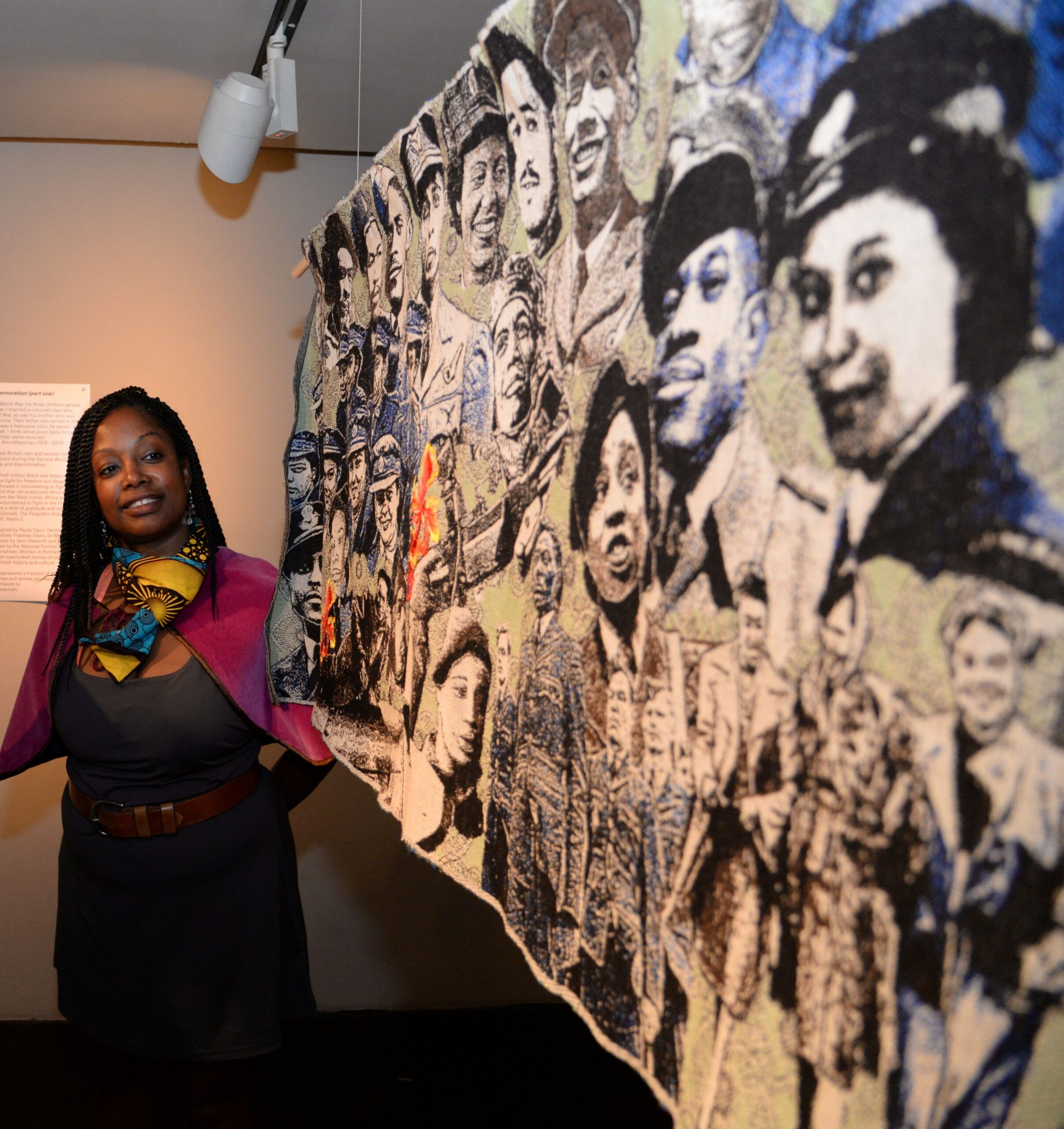
Tapestry of Black Britons -community business
Tapestry of Black Britons is a community interest company, Paula Ogun Hector founded in order to present a more accurate history via an interdisciplinary, art, poetry, woven and digital lens. This approach appeals to different learning styles and offers audiences multiple points of access, which enables more impactful engagement with this knowledge.
This project is an anti-racist strategy designed to bring diverse communities together by shining a spotlight on the African and Caribbean contribution to Britain for nearly 2000 years – together with African and European textile legacies and histories.
Tapestries are created in collaborations with creatives, schools, universities and communities around Britain and the Diaspora. There is strong exhibition demand ahead across Britain.
Whose Knowledge?
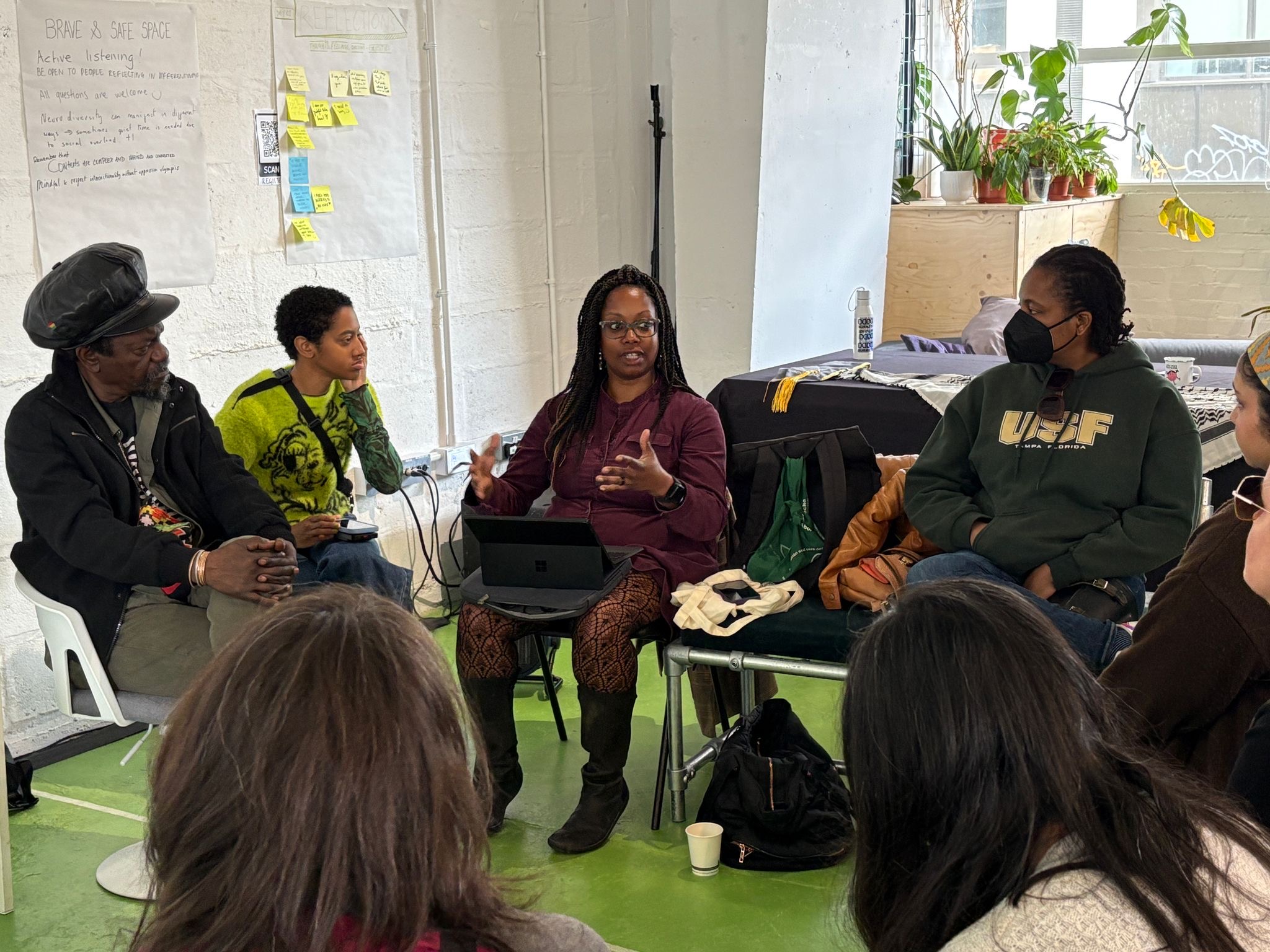
The recent Liberatory, Archives and Memory Convening hosted by Whose Knowledge? in Brighton in April 2025 brought together innovative scholars, practitioners, artists and memory workers each responding to the urgency of preserving what’s being lost and cultivating unique processes and practices in order to preserve our communities’ histories in effective and inclusive ways.
Learning more about this shared commitment to centre community-led processes helped enable me to decolonialise the tapestry co-creative process by ensuring local communities are: consulted at all stages of the process; decide the content and shape exhibition interpretation; lead engagement workshops; add mixed media embroidery; and provide content for digital tapestries. This helps ensure tapestries are relevant to the audiences that will interact with them.
Engaging with this network has not only improved artistic practise it has enabled the Tapestry project to grow a network of like-minded collaborators in Britain and internationally. This is vital as the project had been driven mostly solo.
The digital future of Tapestry of Black Britons
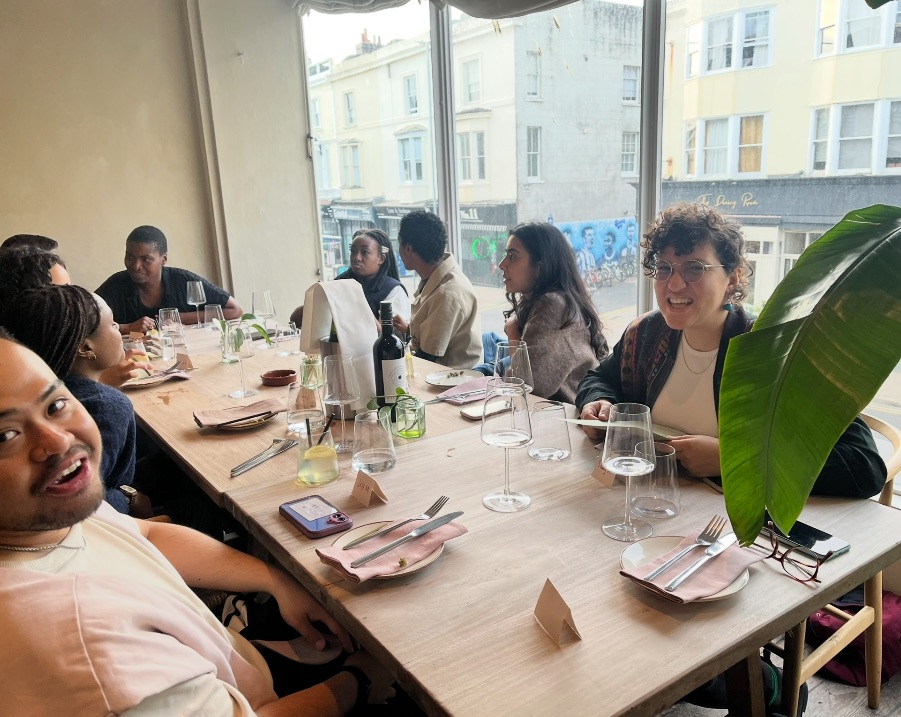
Guided by the shared commitment to centre the community-led process of our network, Tapestry of Black Britons would like to:
- Initiate a global call out for WWII stories for the digital tapestry
- Utilise archive footage to create augmented reality in order to help bring history to life in the woven tapestries.
About me
Paula Ogun Hector is founder and creative director of Tapestry of Black Britons. Influenced by the work of academics Paul Gilroy, Stuart Hall and curator Okwui Enwezor, Paula has presented inclusive histories for over 20 years firstly in TV (BBC Black Britain; BBC When Black Became Beautiful); then as a press officer (Commission for Racial Equality, homeless youth charity Centrepoint, British Film Institute’s Black World Season) and as an educator, established and led an enhanced learning provision for neurodiverse 11–16-year-olds.
‘Lack of awareness about Black British history perpetuates incomplete historical narratives, contributing to underrepresentation and exclusion of Black British stories in mainstream heritage.’
Paula is dedicated to building connections between diverse communities and creative wellbeing; and works to develop partnerships that can provide creative careers opportunities, at all ages. Paula will continue to deliver Tapestry of Black Britons workshops in primary and secondary schools, exhibition venues and universities. Tapestry of Black Britons continues to seek exhibition partners and creative collaborations.
- Connect to Paula and stay updated about Tapestry of Black Britons on LinkedIN
- Enjoy visuals of this work in progress at @tapestry_of_black_britons
- www.tapestryofblackbritons.com