
About the UK Community of Practice Knowledge Production Series
This essay is part of the Liberatory Archives and Memory (LAMy) UK Community of Practice knowledge production series. Together, memory workers, artists, and archivists share reflections, research, and creative practices that reimagine archives as living, collective spaces of resistance, healing, and liberation.
When Sally and Ezrena invited the Brighton convening members to give short lightning talks, I hesitated. Having worked across several community archive projects with distinct themes and approaches, I was not sure what story was mine to tell. In trying to weave a cohesive narrative, I realised a recurring idea was direct access and engagement with the archives. Almost never behind the glass but always handled, touched and interacted with, in real time. I thus framed the presentation and this piece through the concept of “play,” playing with the past through handling archives.
What does it mean to “play” with the past? Far from frivolous, “play” can act as a powerful pedagogic participatory and political tool for re-encountering the past.
Archives often sit behind glass or institutional walls. Treated as sacred, untouchable, and beyond question. Drawing from lived experience, I ask: whose knowledge do archives hold, and for whom? What happens when we shift from reverence to relationship?
Rather than treating archives as fixed, holy repositories, I urge for a participatory approach that brings archives into conversation with the communities they represent. This reframes respect: the archive’s power lies not in its exclusivity, but in use. When archives are only valued as rare or sacred, we risk centering preservation over people, and record over relevance.
Through personal encounters with the archive, I reflect on what it means to play with the past: to handle it, question it, and sometimes, reimagine it. I share my experiences from three community-centered projects: We Are Our History, Uncomfortable Oxford and Becoming Brent. Drawing on playful formats, participatory activities, and reimagining of what counts as “the archive,” I’ll reflect on how these projects have sparked new conversations, challenged historical silences, and helped communities see themselves as part of the record.
Play as Method: Holding the Archive Lightly
Working as the associate researcher on Bodleian libraries’ We are our History: Towards Racial Equity project allowed me to ask, through our community work – who is really allowed to handle the archive? Who gets to respond to it? Who is preserved and who is silenced? What narratives are missing and why?
Traditionally archival practice centres the object and its untouchability. However the historically silenced need intimacy, not more distance; a sense of the archive as a space for encounter, questioning and the presence of their histories. And here, “play” provides an entry-point. We displayed and passed archival material around, asked critical anti-racist questions and drew responses.
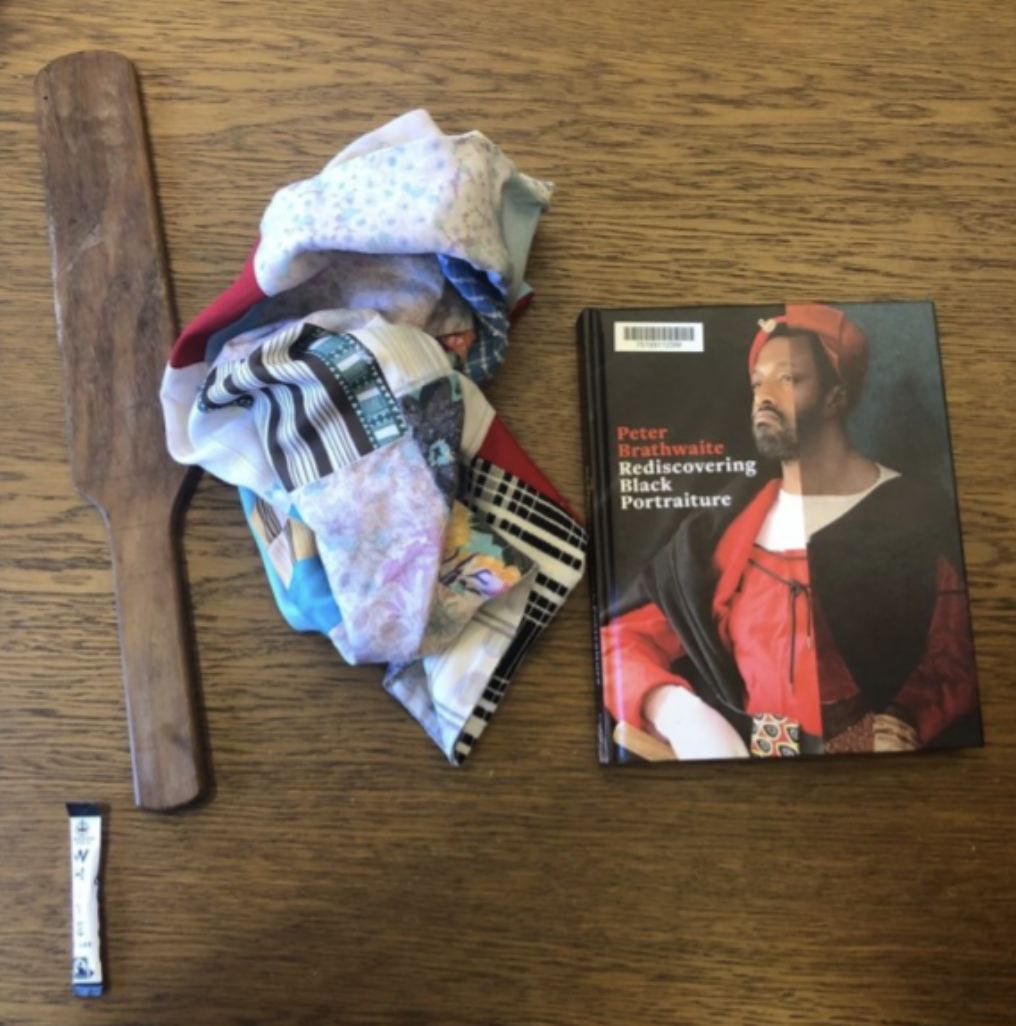
Peter Brathwaite’s story of encountering his ancestors, enslaver and enslaved, in the Bodleian archives showcased the importance of intimacy with archives and how they can transform and are transformed by who holds them.
Peter responded to the archive in many ways – he sang songs of the enslaved in the library, centred the tales of his great-grandparents as people rather than as “items” in a catalogue. His exhibition – Mischief in the archive questioned what counts as an archive – the official record of the enslaved as property or his great grandmother’s pillowcase, the book of “slave” songs or him making us sing them aloud in the Bodleian’s quiet rooms?
Peter embodied “play” and opened a world of possibility in the archives. Once frozen and silent, the Bodleian archives became porous and came alive.
At its heart playing with archives as a method means prioritising people and their lived experience and stories over the paper record. Peter’s interaction revealed the creativity and transformation released when people are allowed to “play” with the archive. The future of the archive does not just depend on conservation but on connection, the living relationships built in the present.
Play reclaims agency, insisting that the marginalised are not merely subjects of history but agents in how it is told.
Questioning Historical Authority
For those whose lives are still shaped by legacies of empire and exclusion, the “past is the past” is a fallacy. These legacies persist in our spaces, education curriculum, house policies, systems and archives. As a senior guide for Uncomfortable Oxford, we confront these persisting legacies not through lectures but participatory walking tours that invite discussion, provocation and even play.
At every stop, participants receive complete, historically grounded researched accounts of figures like Cecil Rhodes, class issues and the town-gown divide of the city and then are prompted to ask their own questions. In my experience as a guide, individuals often laugh at the absurdities of empire even as they are horrified by what is hidden in plain sight. Spatial exercises such as asking “who is missing from these statues”?help literally see power and absence built in their environment.
Collaborative discussion encourages participants to form their own interpretations rather than receive conclusions from a guide. Play here lies in shared exploration and openness. I understand our roles here as dismantling the false authority of the historian and making room for dialogue.
This also echoes bell hook’s notion of engaged pedagogy that values dialogue, community and mutual transformation (1994). The past is not set in stone but an ongoing conversation and play creates the conditions for this conversation to be honest, messy and generative.
To play is to engage – to handle – to question – to negotiate and to criticise – not keep the past on a pedestal averse to all such interactions.
Archives Without People Have No Future
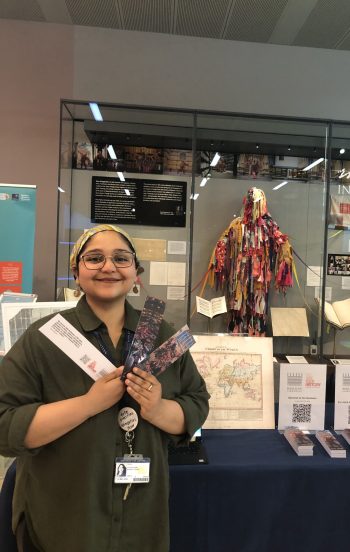
The British Empire Exhibition (B.E.E), one of the largest events in the history of colonial Brent, took place from 1924 to 1925. The official aims of the exhibition were articulated as to stimulate trade and reinforce imperial connections when Britain was increasingly being challenged powers on the global stage. In reality, it reflected the exploitation of colonised peoples and resources. The archives mirror this extractive reality in their silences and inclusions.
As the decolonisation consultant for Brent Council’s project Becoming Brent, one of our most engaging community activities addressing the B.E.E. “Postcards in Perspective.”We created facsimile of postcards from 1924-1925 exhibition and invited community members to tear, remix and create new postcards reflecting their present realities. Brent, one of the most diverse areas, came alive through these creations.
By handling facsimiles, non-specialist participants made the past tangible — literally touching and transforming it. The resulting postcards contributed to a new exhibition, challenging the original imperial images and forming a counter-archive.
My call to play with the past is not a rejection of history but a commitment to a more ethical future. It demands methods that centre humanity over hierarchy. A refusal to let dusty inaccessible manuscripts be held in higher regard than the communities who engage with them.
The archives are not the only thing we preserve. We have to preserve dignity, relationship and accountability.
Play here becomes a decolonial method, interrupting reverence to reimagine whose histories matter and how we tell them. It treats the past with both creativity and care.
Conclusion: Playing Forward
In a time when memory is contested and history weaponised, we need methods that resist this rigidity while allowing pain and possibility. And play, is one such engaged method. Play insists that past belongs to all of us, not as reverent observers but as engaged participants.
Devika is an education consultant and research practitioner whose passion and research focus on how people engage with knowledge, especially libraries, archives and museums. She firmly believes that archives come alive through their people, a principle at the heart of her ongoing doctoral research at the University of Oxford and professional practice. Her approach is driven by a commitment to equity-based methodologies and fostering inclusive spaces for reflection, dialogue, and creativity.
References
hooks, bell. (1994). Teaching to transgress : education as the practice of freedom. Routledge. https://doi.org/10.4324/9780203700280
Bodleian Libraries. (n.d.). We are our history: Towards racial equity. University of Oxford. https://www.bodleian.ox.ac.uk/about/libraries/our-work/we-are-our-history
Uncomfortable Oxford. (n.d.). Oxford Natural History Museum: New tour. https://www.uncomfortableoxford.com/oxford-natural-history-museum-new-tour
Brent People’s Museum. (2024, October 10). Decolonising Brent: Reflections on “Postcards in Perspective.” https://brentpeoplesmuseum.org/2024/10/10/decolonising-brent-reflections-on-postcards-in-perspective/